Shepherds Rest Farm

Name:  Shepherds Rest Farm

Location:  Newberg, Oregon, United States

Monday, October 30, 2006

Cheetah Outreach & Spier Wine Estate
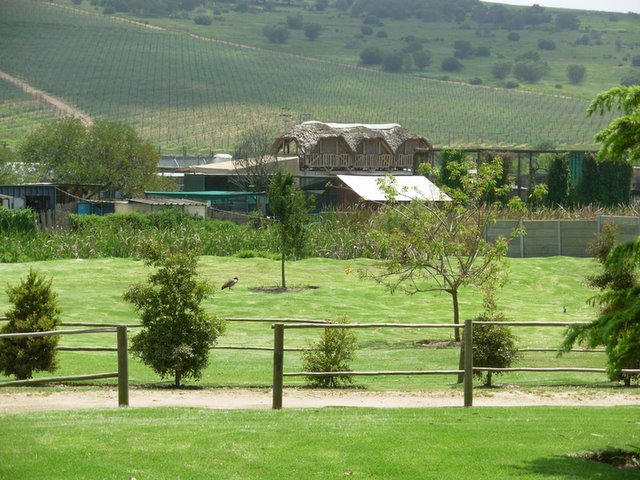
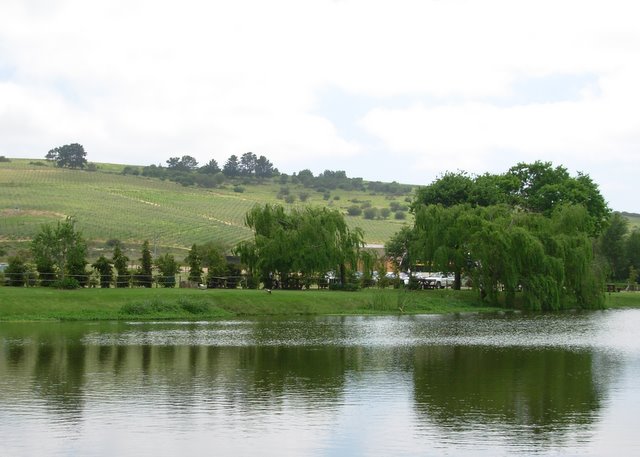
Here is looking at one of the taller Cheetah Outreach buildings with a grass roof. Cheetah Outreach is located on the Spier Wine Estate grounds, which is about 25 minutes from Cape Town, South Africa. Notice the vineyards on the hill in the background.
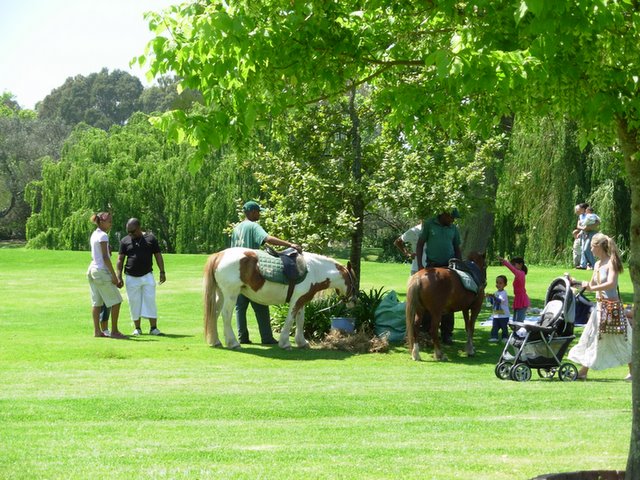
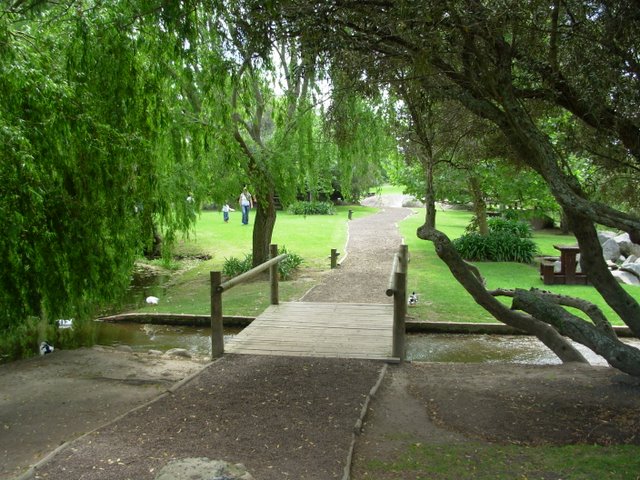
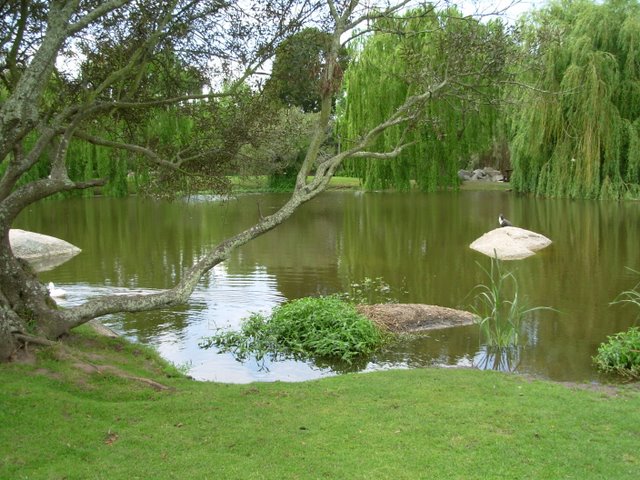
The rest of these pictures are of the Spier Wine Estate itself, with a lake you can walk around, or an outside restaurant where you can dine along the lake.
Posted by Picasa


 Posted by Picasa

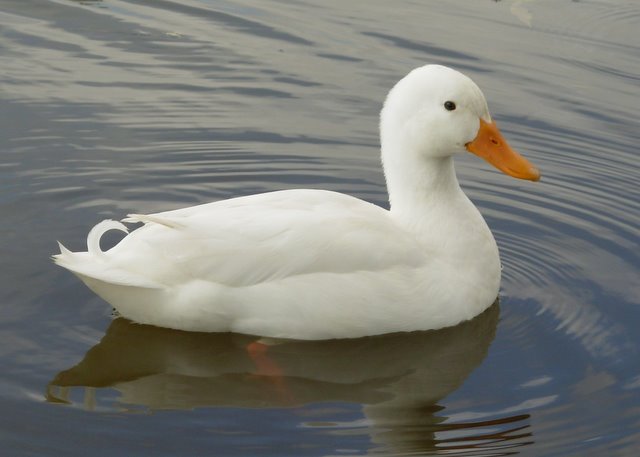
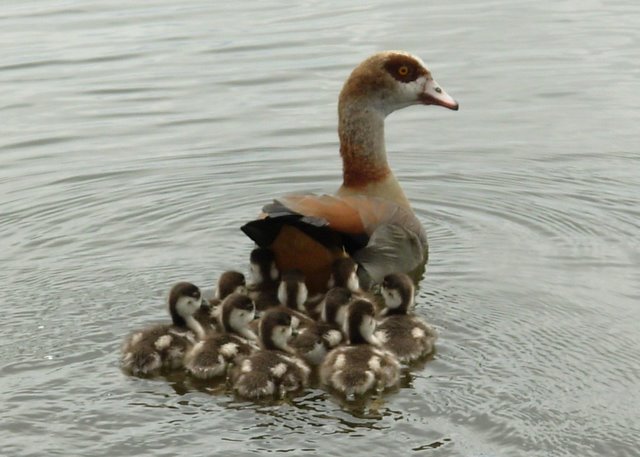
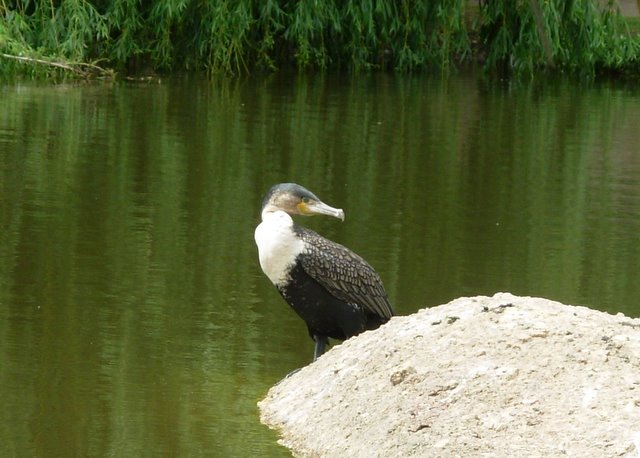
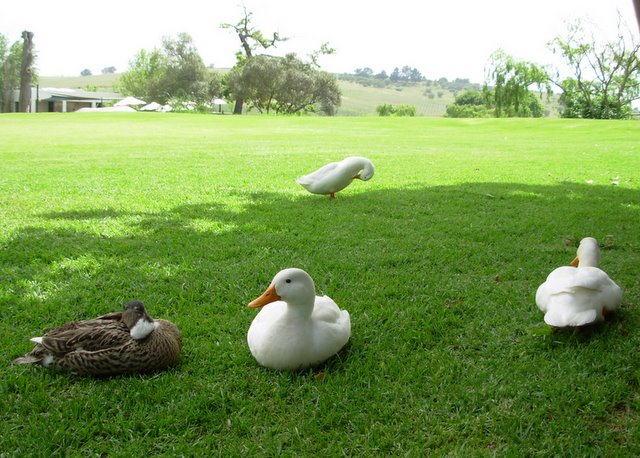
Wildlife at Spier Wine Estate.


 Posted by Picasa


 Posted by Picasa

Friday, October 27, 2006

Bottom Tip of South Africa

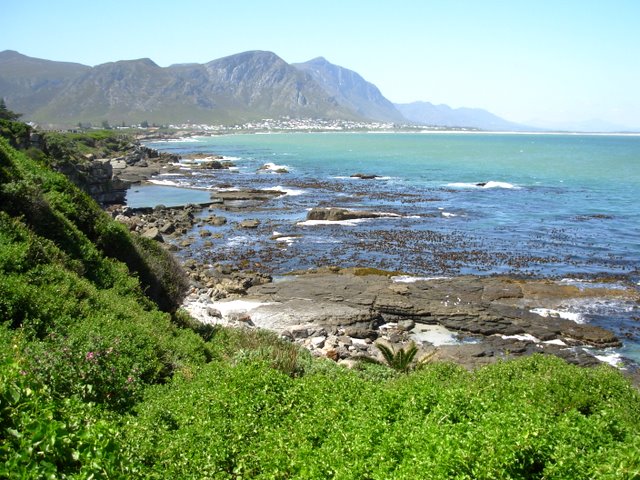
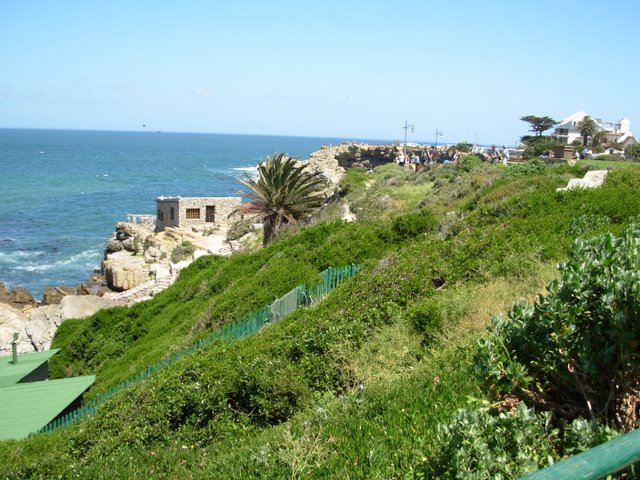
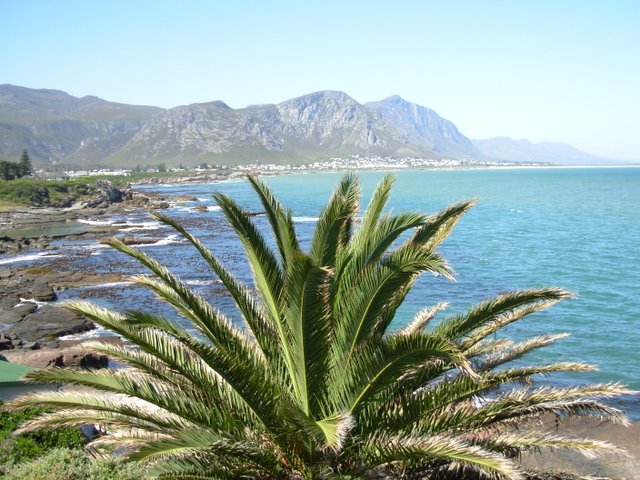
This is Hermanus, one of the towns along the southern tip of South Africa. The weather was delightful and not too windy.
Although the area is subtropical, I was told that when you stick your toes in the ocean, you get an earache immediately from the cold water. (Antarctica is not that far south on the globe!)
Palm trees and some citrus trees grow in the area. Mainly there is a huge variety of low growing plants, about as tall as sagebrush.
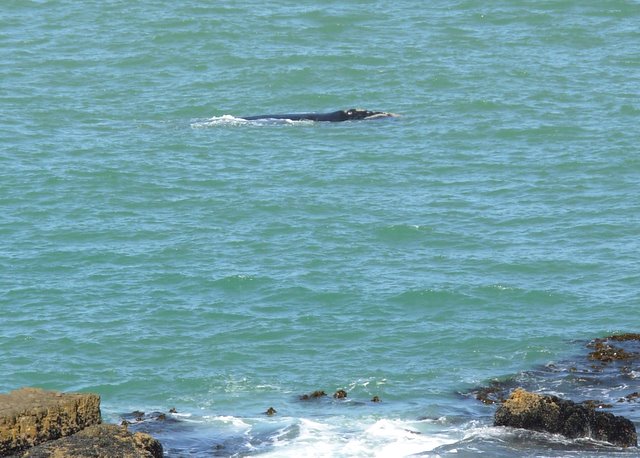
Hermanus is famous for its whale watching. As you can see, I saw whales! There was a whale crier that would blow his horn and point, every time he saw a whale! Posted by Picasa

Critters & Places, South Africa

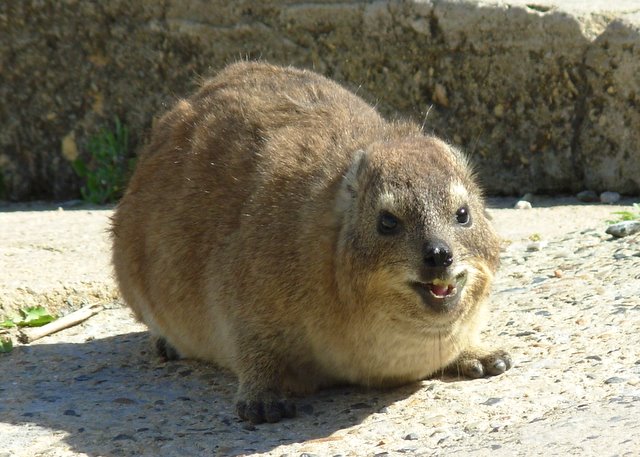
These critters were out nibbling the grass by the ocean in Hermanus, middle of the day. They look a bit like large rats or squirrels with no tails.
I don't recall their name. Do they live only in South Africa? That's a mystery to me. Fascinating creatures. Very tame. I held an empty hand out and one of them walked right up to me! I didn't wait to find out if they bite!
I also crossed this critter, same town. Is it a common lizard?
McDonalds was not the only familiar fast food restaurant in South Africa. (I also saw this restaurant in London!) Posted by Picasa

Thursday, October 26, 2006

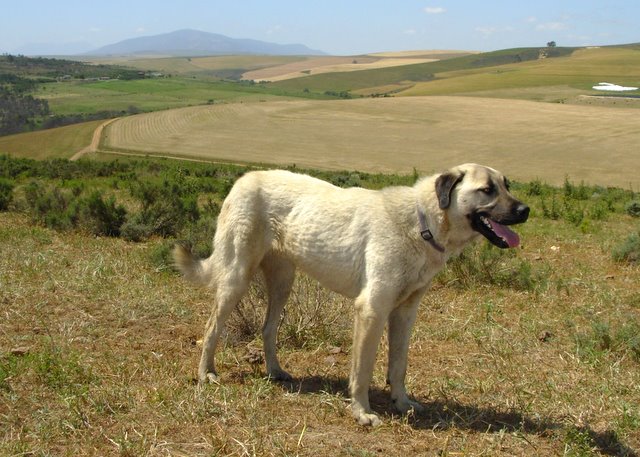
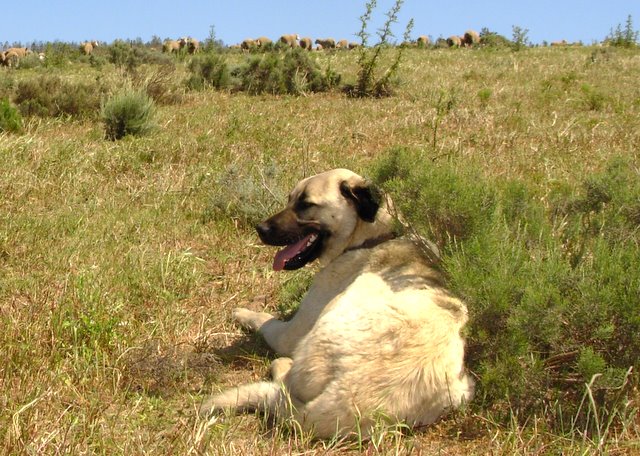
Uthaya, Working Guardian in South Africa

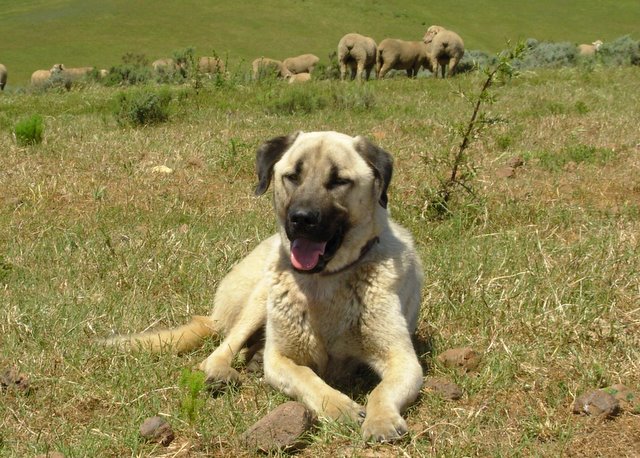
Meet Uthaya, an Anatolian Shepherd dog. Cheetah Outreach has placed him on a working farm as part of their pilot program of placing Anatolians with farmers to guard livestock against predators.
The hope is that Anatolians like Uthaya will help change the future of the cheetah. Instead of being captured or killed by farmers, the cheetah usually respect the Anatolians and move on to find easier prey.
Uthaya was placed on this farm at six weeks of age. He was first raised with the small stock.


Uthaya's owner reports "tremendous success" having Uthaya on his farm. To date, no sheep have been lost to predators while Uthaya has been on watch! Posted by Picasa

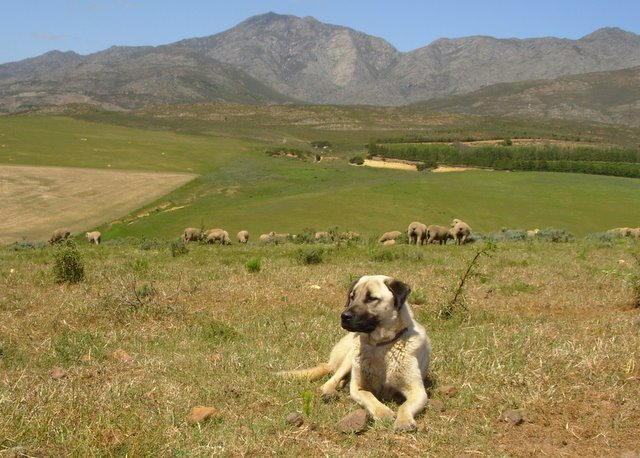
Here, Uthaya is lying in a small bit of shade while scanning the valley below for predators. Anatolians are extremely adaptable to extremes in temperature.


Before leaving, Liesl (left) and Annie Beckhelling (right) check over Uthaya to ensure he is healthy.


Here is a better shot of the valley over which Uthaya watches, keeping predators at bay.

The road back to Cheetah Outreach. Posted by Picasa

Morocco's Job

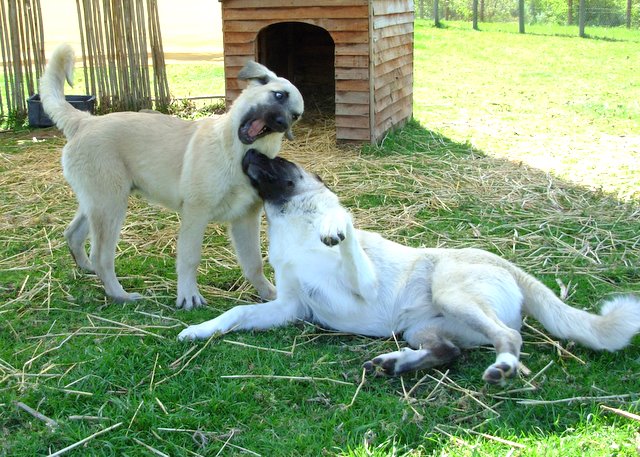
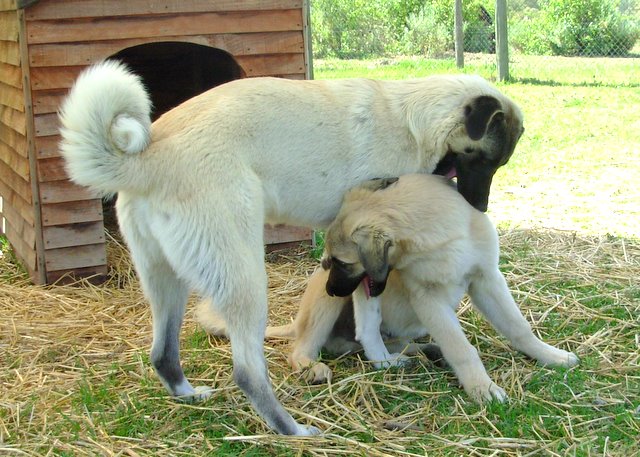
Part of Morocco's job in South Africa involves getting along with the girls. Do you think he's accomplishing that feat? This first picture might earn him the nickname, "mouth."
"Bite my back, I'll bite your leg!"
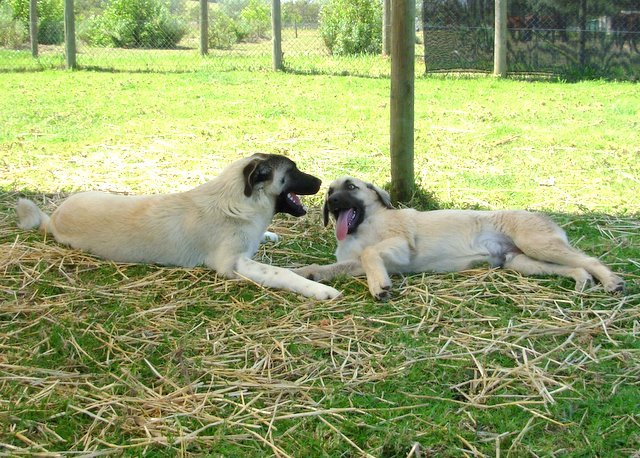
Completely tuckered out, both Morocco (right) and Melda are ready to jump up in a split second, depending on who twitches a muscle first!
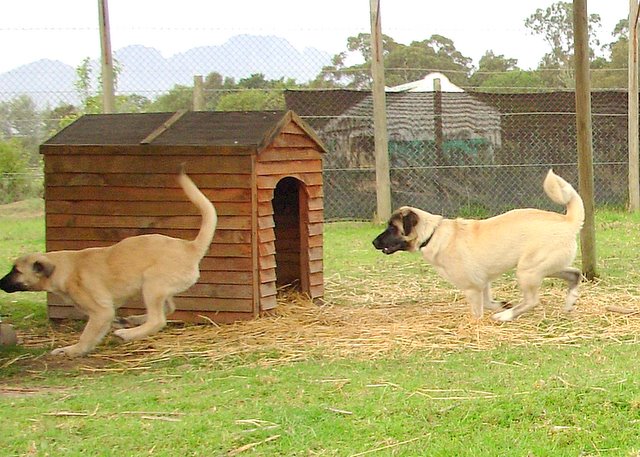
THERE they GO again, Morocco screeching to a halt in the lead. I doubt he fooled Melda!

Morocco seems to be adjusting marvelously to his new home at Cheetah Outreach! Posted by Picasa

Tuesday, October 24, 2006

Cheetah Outreach Raises Cub

More pictures of Victor are shown here.
See the white fluff on the back of Victor's neck? That's called a "mantle." It helps camoflage the cub in the wild. It will disappear as Victor matures.
Victor will be considered an adult when he is two years old.
Despite his bonding with humans, he is still a wild animal. Notice his attention to something (probably birds). Posted by Picasa

Save the Cheetah Cubs!

Cub litters are usually three or four cubs, but there have been litters up to eight. The cubs are nursed for three or four months, but are dependent upon their mother for eighteen months. During nursing time, the mother needs twice as much food as normal and so goes on hunts more frequently, leaving cubs at the mercy of other predators. At independence time, male siblings often remain together for life, while females will live a solitary life, except for when raising their own cubs. Unfortunately the mortality rate of cubs is estimated in some places as 70 to 80 percent.
This precious cheetah cub, Victor, is 3 1/2 weeks old. He was taken from his mother after his sibling was killed by her. He thrives under the 24-7 attention of Cheetah Outreach staff and volunteers.
When Victor's caretakers leave him alone for brief moments to further attend to his needs, Victor will make a chirping sound, just like birds make. His chirping is a sign of his anxiety or unhappiness at being left alone.
Victor also purrs and seeks attention. In the evenings, he has 3 cub buddies who stay with him. Then he gets frisky and those 4 cubs will run all over their enclosure. But at night when it's dark, these cubs sleep inside on blankets in a tiled room with a heated floor. Posted by Picasa

Monday, October 23, 2006

Kissed By A Cheetah

Here's Morocco (4 1/2 months old) with his new girlfriend, Melda (8 months old), at Cheetah Outreach in South Africa. They get along great! Liesl, the trainer of the Anatolian Shepherds at Cheetah Outreach is in the background. She also works with the farmers to ensure successful placements of the Anatolian puppies.
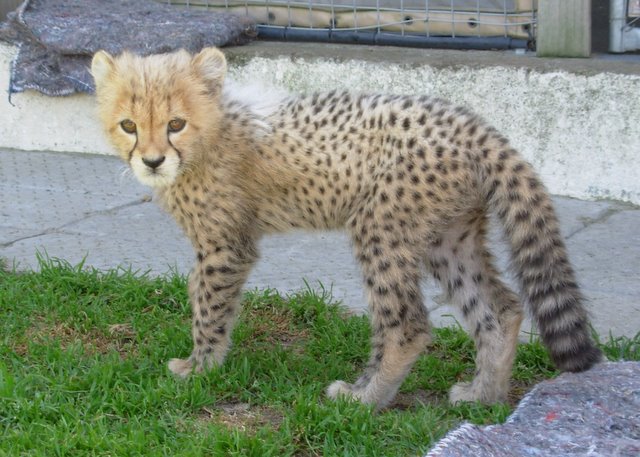
This is the thumb-sucking cheetah. Yes, that IS a human thumb. It belongs to Christo, the man in the pictures below. He is a trained cheetah handler at Cheetah Outreach.
This sleepy cheetah is about to give Christo a kiss.
Yep, Christo just got a nice big cheetah kiss! Have you been kissed by a cheetah today?! Posted by Picasa

Sunday, October 22, 2006

Morocco's Mission

This beautiful cheetah is why Morocco is at Cheetah Outreach. Anatolian Shepherd dogs (ASDs) are one of the solutions to the declining number of free ranging cheetah in Africa. ASDs instinctively protect the livestock they grow up with and eliminate livestock loss. While ASDs protect the livestock, farmers are less likely to find cheetah on their farmlands and thus are less likely to trap or shoot the cheetah. This improves the cheetah's chance of survival.
The cheetah has, in the past, been a companion to kings and pharaohs, as well as a trained hunting partner. In 1900, the cheetah population numbered about 30,000 cheetah in Africa and Asia, yet just 6 years ago there were only 12,500 in Africa and 200 in Iran. (Cheetah became extinct in India in the 1950's.) This magestic animal, that can accelerate from 0 to 45 mph in 2 seconds and run up to 70 mph, is endangered due to a number of reasons. The main reason is that humans are moving in on their habitat. There is also a decrease in prey as well as competition from other predators. As their population becomes fragmented, inbreeding depletes their numbers as well. Mortality of cubs under 6 months old is very high.
To help Cheetah Outreach save the cheetah, visitors can pay for an encounter with an ambassador cheetah. I was privileged to have one of these personal cheetah encounters. Their loud purr is absolutely amazing, and I was witness to the affection given between the cheetah handlers and the cheetah. (In fact, I'll share a picture tomorrow of a cheetah sucking the thumb of his handler, and some other priceless pictures!) Just look at this aloof yet gentle cat! However, the lion is more powerful, the leopard a skilled climber able to pull their catch away from other predators into trees, and large packs of wild dogs can outnumber the cheetah and steal their kill. Scavengers like jackals and hyenas will also try to make cheetah abandon their kill. Sadly, we are seeing the results from encroachment on the land as the land is claimed for agricultural use. Cheetah numbers continue to decline as there is less room for the cheetah and thus more competition between predators for food.
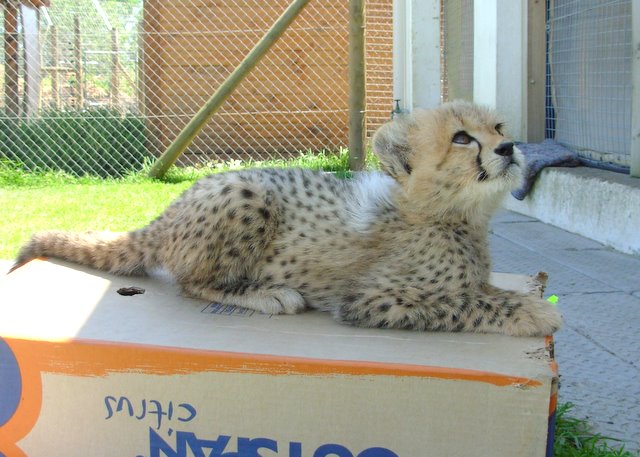
The staff at Cheetah Outreach adore their animals and maintain an immaculate facility for the cheetah to thrive in. They are actively working with farmers and communities to improve the cheetah's chance of survival. Using the cheetah as a learning tool, they visit classrooms to educate children about the need for conservation. They deliver curriculum-based resources for classroom use. Now they are developing an Anatolian Shepherd dog breeding program in order to place more puppies with farmers in the battle to save the cheetah! But there's more to come tomorrow! Posted by Picasa

Saturday, October 21, 2006

Morocco Helps Save Cheetah

Shepherds Rest Morocco left two weeks ago to live at Cheetah Outreach (a cheetah conservation facility) near Cape Town, South Africa. If all goes as planned, Morocco will have the privilege of siring puppies that will be placed with farmers to guard the livestock against the cheetah and other predators. By their presence with the livestock, Anatolian Shepherd dogs deter cheetah away from livestock and their farmland, decreasing the chance that farmers will shoot the cheetah.
After the 3 hour drive to Seattle and the 4 hour wait before the flight, Morocco flew from Seattle to London, a flight just over 9 hours. In London, the most wonderful British Airways pilot asserted his stripes and surprisingly escorted me straight down below the aircraft, upon our arrival, to see Morocco, knowing that I would be unable to see him during his 5 hour layover in British Airways kennels. Morocco was calm, happy (wagging his tail), still had water left in his water bowl, and his newspaper bedding was only wet a little bit in the back of the cage.
The flight from London-Heathrow to Johannesburg, South Africa, was a flight of almost 11 hours. I did not expect to see Morocco there, as someone was to meet with Morocco for his vet evaluation and see to his connection to Cape Town (a 2 hour 10 minute flight). However, plans changed. The vet deemed Morocco healthy, but no one showed up to connect him to his flight. (I heard later that the gentleman spent hours looking for Morocco at the airport and never could find him.) So, with the nice help of a South African porter in combination with a taxi driver, including numerous trips around the airport (not within walking distance) lasting all morning and involving much paperwork and several hundred dollars in tips, Morocco was picked up from the international cargo area and taken to the domestic cargo area for his connecting flight.
Although Morocco seemed somewhat confused in Johannesburg, I was able to take him out of his cage, feed him (airport personnel were not allowed to do that, I was told), give him water, and take him for a good walk. (He did 3 huge poops while walking!) He remained calm, but I was very thankful I was there to reassure him with my presence. Boy, was it great to see Annie Beckhelling, Founder of Cheetah Outreach, in Cape Town, waiting for us. Especially since we had missed our flights, and had been unable to get ahold of her to let her know. Apparently Annie first thought she had lost Morocco when her contact there couldn't find him at the airport. Then when I didn't arrive on the scheduled flight, she thought she had lost me too! She tried calling Jim, my husband, back at home (middle of the night, of course, since South Africa is 9 hours ahead of Oregon), but I hadn't been able to contact him either in the confusion and hustle. However, Morocco and I arrived safe and sound, and were thrilled to be with Annie at Cheetah Outreach.

Stay tuned for more on Cheetah Outreach, Morocco, the cheetahs, and my wonderful visit later, as I'm still catching up from being gone! Posted by Picasa